
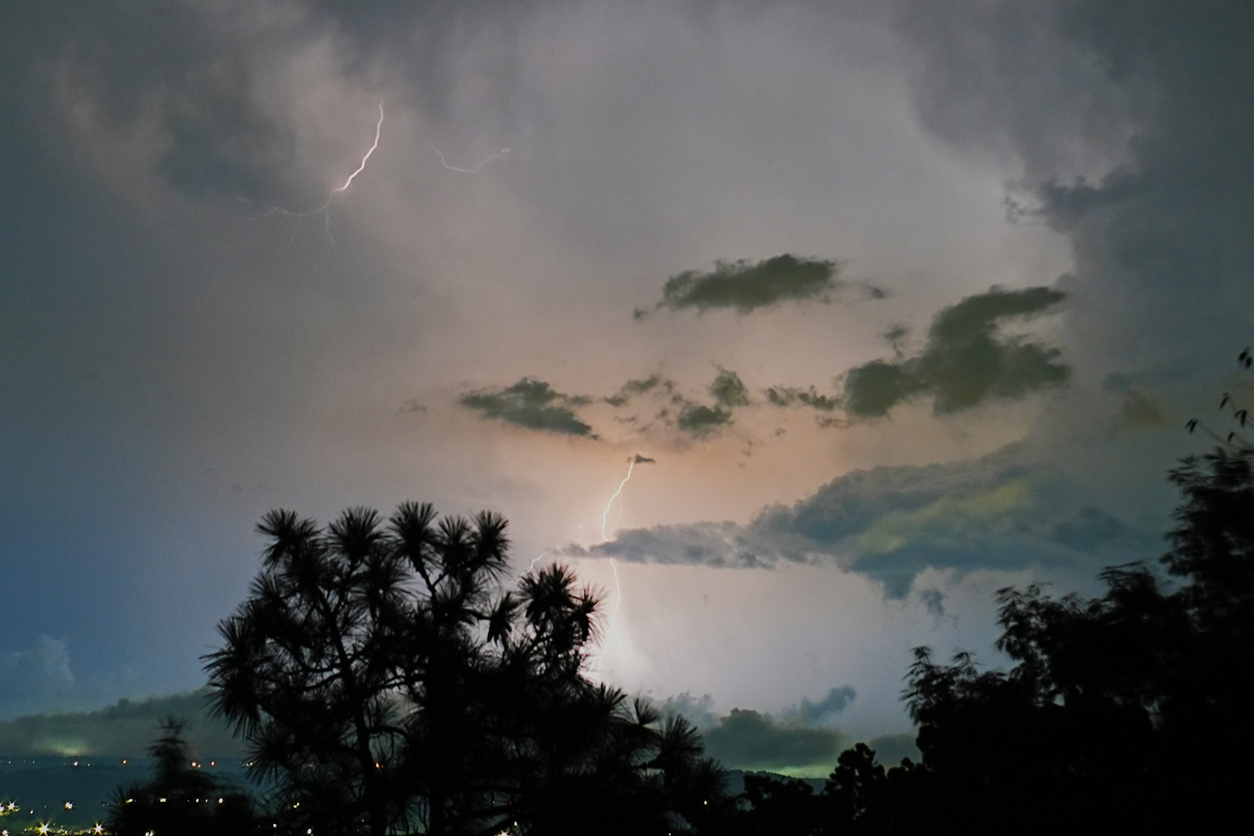
It’s 2 pm on a Tuesday in July, and all you see are gorgeous blue skies. Then, by 3 pm, two inches of rain have fallen in forty minutes, your yard looks like a pond, and your downspouts are losing the battle. Summer foundation damage in Alabama doesn’t happen because of how much rain falls… it happens because of how fast it falls. It is that very distinction that matters more than most homeowners ever realize.
Alabama averages nearly 57 inches of rain per year, and statewide, December and January are actually the wettest months by total volume. But slow winter rain gives soil time to absorb and drainage systems time to keep up. A summer thunderstorm that drops two inches in an hour gives your clay soil exactly zero time to do either. The result is acute, rapid foundation stress that winter rain rarely produces.
Here’s what that means for your home, and what to do about it.
The Storm Damage Forecast: What You Need to Know
- Alabama summer thunderstorms cause foundation damage through intensity, not volume — soil can’t absorb fast rainfall, so it presses sideways against your foundation instead.
- Red clay soil saturates quickly, builds hydrostatic pressure fast, and then shrinks during dry spells — both phases damage foundations.
- Cracks, water intrusion, and crawl space moisture all spike after summer storm events.
- A 72-hour post-storm inspection of your foundation perimeter is one of the most valuable things you can do as an Alabama homeowner.
- Protection works as a system — drainage, waterproofing, sump pumps, and crawl space encapsulation together, not separately.
It’s Not How Much Rain Alabama Gets, But How Fast It Falls
Your foundation doesn’t care about monthly rainfall totals. It cares about the next forty minutes.
When rain falls faster than soil can absorb it, which Alabama summer thunderstorms do routinely, the excess water doesn’t drain downward. It moves sideways, following gravity straight to your foundation wall. Alabama’s red clay soil has one of the lowest absorption rates of any soil type in the country, which means it gets overwhelmed fast. Five inches of December rain spread over several days gives drainage systems time to keep pace. Two inches in forty minutes in July gives them nothing.
And the storms are getting worse. The NOAA National Centers for Environmental Information Alabama State Climate Summary documents a clear and sustained increase in extreme precipitation events across the state: more intense storms, arriving faster, on soil that hasn’t changed in ten thousand years.
What Summer Storms Actually Do to Your Foundation
Water from storms never just ‘sits there’ when it comes to your foundation. Here’s the damage chain a summer thunderstorm sets in motion.
Hydrostatic Pressure Builds in Hours, Not Days
When clay soil saturates rapidly, it exerts significant lateral pressure against foundation walls. That pressure is what bows walls inward, widens existing cracks, and pushes water through any opening it can find. Horizontal cracks in foundation walls are the most direct result of this kind of pressure, and they’re the most serious crack type a homeowner can find. If you’re seeing one, foundation repair needs to be on your radar today, not next season.
Existing Cracks Worsen Fast
Summer storms don’t create foundation problems from nothing, but instead, they accelerate what’s already there. Hairline cracks that were stable in spring become active water pathways in July. Diagonal and stair-step cracks widen when sudden soil saturation triggers uneven settling beneath the structure. If you’re unsure what type of crack appeared after the storm, here’s how to read what each one means and when to act.
Basements and Crawl Spaces Take the Hit
Storm water finds every weakness: through the cove joint, through porous block walls, through gaps between the foundation and the floor system above. Crawl space moisture spikes dramatically after summer storms as ground moisture rises and humid storm air infiltrates through vents.
If summer rain is getting into your basement, here’s how to identify whether it’s true intrusion or condensation, and why the difference changes the fix entirely. Alabama’s summer humidity makes crawl space moisture a compounding problem that starts at the ground and works its way up through your floors and into your living space.
The Wet-Dry Cycle is Alabama’s Hidden Foundation Threat
Here’s the angle most homeowners never consider: Alabama summers don’t just bring intense storms. They alternate between those storms and dry, drought-like spells. That cycle is uniquely damaging. Saturated clay swells dramatically during storms, then shrinks and pulls away from the foundation as the soil dries out, in turn creating voids and gaps that leave the foundation without soil support.
Over multiple summer seasons, this shrink-swell cycle is one of the primary drivers of foundation settlement in Alabama homes. The USDA Web Soil Survey maps shrink-swell clay ratings across Alabama counties, and Jefferson, Shelby, and Madison counties all rate high, meaning Birmingham, Hoover, and Huntsville homeowners are living on some of the most foundation-stressful soil in the Southeast.
Warning Signs Your Foundation Took Summer Storm Damage
Walk your foundation perimeter within 72 hours of a major storm. Here’s what warrants a call:
During or right after the storm:
- Water is pooling against the foundation or running toward the house rather than away
- Gutters overflowing or downspouts emptying directly adjacent to the foundation
- Basement or crawl space actively taking on water
In the days following:
- New cracks are appearing near doors, windows, or along foundation walls
- Existing cracks visibly wider than before the storm
- Doors or windows suddenly sticking or failing to latch
- Floors are feeling more uneven than before
- New moisture, musty smell, or dampness in the basement or crawl space
- Soil visibly eroded or pulled away from the base of the foundation
Pro Tip: The 72-hour window after a major summer storm is when post-storm foundation damage is most readable and most actionable. Waiting until the damage is obvious inside the home means you’ve already let it progress further than necessary.
If you’re in the Birmingham area and spotted something after a storm, here’s when a foundation scan is the right next call.
Foundation Protection That Works Against Alabama’s Summer Storm Season
Protection isn’t one product—it’s a system. Here’s what works together.
Exterior Drainage: The First Line of Defense
Properly graded yards, French drains, and dry creek beds intercept storm runoff before it ever reaches the foundation wall. Summer storm volumes expose every weakness in a drainage system: if water pools in the same spots every storm, the problem isn’t going away on its own. Exterior drainage solutions are the most cost-effective foundation protection investment you can make before storm season.
Sump Pumps: Ready When It Counts
A sump pump is only as reliable as its last maintenance check—and summer storm season is exactly when underprepared pumps fail. Sump pump installation and regular sump pump maintenance before summer are not optional for Alabama homes with a basement water history.
Gutters and Downspouts: The Most Overlooked Fix
Clear gutters and downspouts extended at least six feet from the foundation can dramatically reduce stormwater concentration against foundation walls. Gutter installation and guards are a straightforward upgrade that pays for itself the first time a major summer storm tests them.
Pro Tip: Before storm season, confirm that every downspout extends at least 6 feet from the foundation and that gutters are free of debris. A blocked gutter during a two-inch-per-hour summer storm dumps hundreds of gallons directly against your foundation, and that’s a problem no sump pump should have to solve alone.
Alabama Summer Storms Don’t Wait, and Neither Should Your Foundation
Summer thunderstorms in Alabama are brief, intense, and disproportionately hard on foundations, not because of rainfall volume, but because of speed, soil type, and the wet-dry cycle that follows every storm. The homeowners who understand that and act on it before the damage compounds are the ones who avoid the expensive repairs that come with ignoring it too long.
BDry Alabama has been protecting homes from exactly these conditions across Central and North Alabama for over 65 years. The BDry Elite maintenance plan keeps your systems monitored between storms—so small issues don’t become summer emergencies.
Get Your Foundation Storm-Ready By Scheduling a Free Inspection Today
That summer storm season isn’t slowing down, and neither is Alabama clay soil. Whether you spotted something after the last storm or you just want to know where your home stands before the next one, BDry Alabama’s free foundation inspections give you clear answers and a plan built around your home. No pressure, no guesswork, just honest expertise from the team Alabama homeowners have trusted since 1958.
Call (205) 942-1976 or contact us online to schedule your free inspection today.