
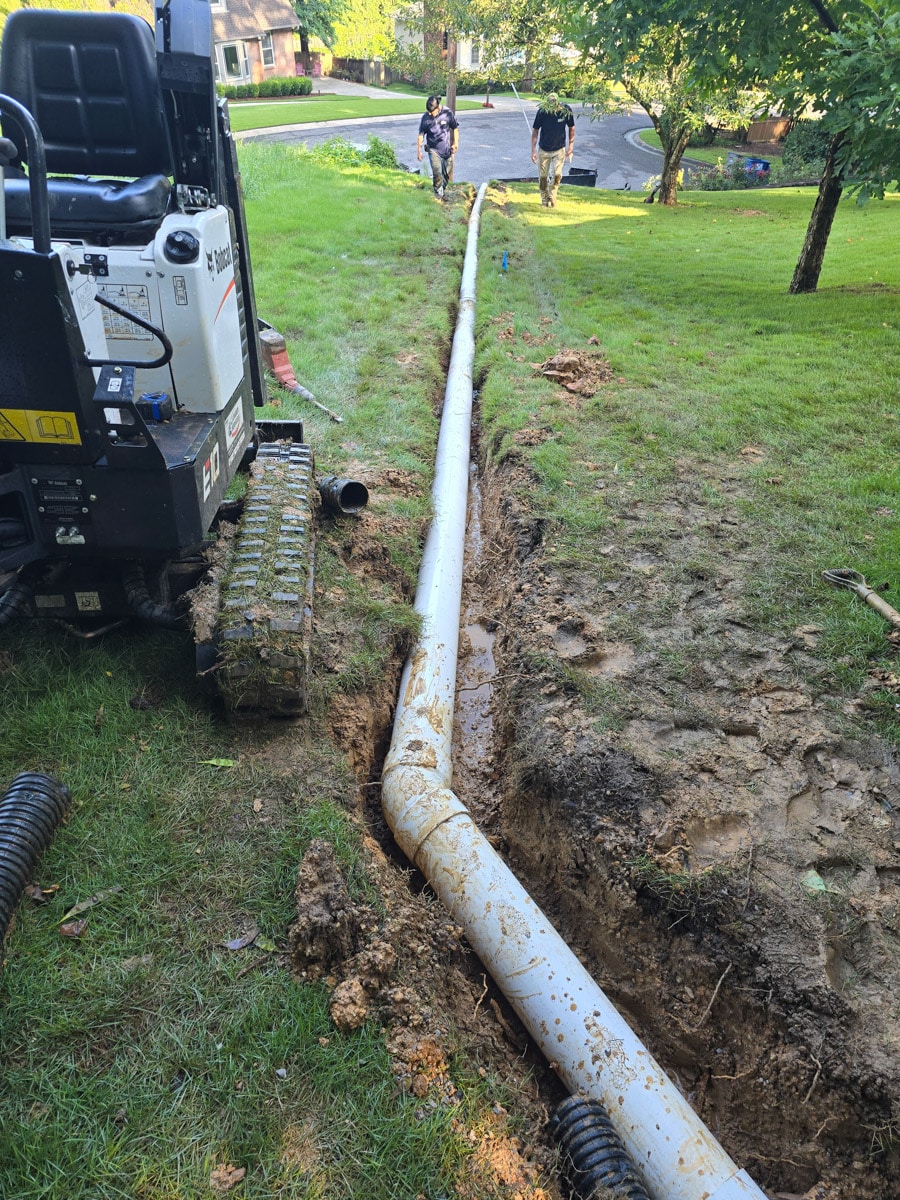
French Drain Installations Done Right in Alabama
A French drain only works as well as the way it’s installed. The slope has to be right, the placement has to match how water moves on your property, and the system needs to stay dependable long after the trench is closed back up. French drain installation is about getting those details right from the start, so water has a clear path away from the home.
BDry Alabama handles French drain installation with a plan that fits your yard, your drainage patterns, and the areas that stay wet the longest. We are locally owned, backed by a brand with 65+ years of experience, and we help 500+ homeowners every year. With a 4.8-star Google rating, financing available, and strong warranties, you will get practical recommendations and clean next steps you can feel good about.
The Installation Details That Matter Most Underground
A French drain can look simple on the surface, but what happens underground is what makes it work or fail. The placement, slope, and materials all play a role in whether water moves smoothly away or ends up backing up and causing the same problems again.
The details that matter most underground include things like:
Getting these details right from the start helps the drain do its job quietly and consistently. A well-installed system moves water out of the problem areas without drawing attention to itself or needing constant fixes later.
French Drain Installation FAQs for Alabama Homeowners
A French drain works best when it is installed with the right placement and slope, not guesswork. These FAQs cover the questions Alabama homeowners ask most about French drain installation, including what the process looks like, how planning works, and what to expect when you schedule an inspection and talk through next steps.
No. French drain installation is typically focused only on the areas where water needs to be intercepted and redirected. The goal is to be precise, not disruptive, so excavation is limited to the planned drain path and outlet area.
The exact amount of digging depends on the layout of your yard and where the water problem is occurring. A well-planned installation targets problem zones while keeping the rest of the yard intact as much as possible.
French drain installation follows a planned process to make sure water moves the right way and the system performs long-term. Each step is designed around how water behaves on your property.
- Identify drainage patterns and problem areas
- Plan placement, depth, and slope
- Excavate the drain path
- Install drainage fabric, gravel, and pipe
- Connect the system to a proper outlet
- Backfill and restore the surface
Once installed, the drain quietly redirects water away from the problem areas without drawing attention to itself.
After water enters the French drain, it travels through the pipe toward a designated outlet. That outlet is chosen based on the layout of the property and where water can safely exit without creating new issues.
The goal is always to move water away from the home and problem areas. When the outlet is properly planned, water disperses naturally and does not cycle back toward the foundation or yard.
The materials used underground play a big role in how well a French drain performs over time. Quality components help keep the system flowing and reduce the risk of failure.
- Proper drainage pipe designed for subsurface water
- Clean gravel that allows water to move freely
- Drainage fabric to keep soil out of the system
- Correct fittings and connections
- A clear, reliable outlet
Using the right materials from the start helps the drain work quietly and consistently for years.
Preventing clogs starts with proper design and installation. Using clean gravel, protective fabric, and the right pipe keeps soil and debris from entering the system in the first place.
Long-term performance also depends on protecting the drain path above ground. Avoiding heavy compaction, keeping outlets clear, and being mindful during landscaping changes all help a French drain continue doing its job without interruption.
When water keeps showing up, guessing gets old fast. Waterproofing helps control where water goes, reduces dampness, and protects the foundation and lower levels of your home so you can stop worrying about the next storm. Contact BDry for clear guidance, simple next steps, and support from a team Alabama homeowners trust.