
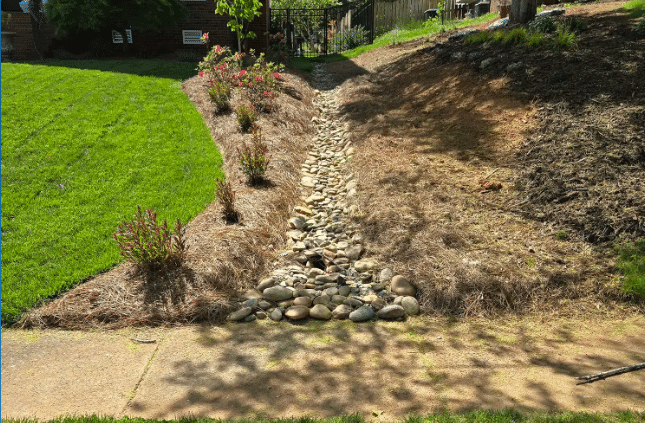
Dry Creek Beds That Control Alabama Runoff
Some drainage fixes do their job and disappear. Dry creek beds do the opposite in a good way. They give runoff a natural path to follow while adding structure and visual interest to the yard, especially in areas where water likes to rush or collect after heavy rain.
BDry Alabama designs dry creek beds that manage water and blend into the landscape instead of cutting across it. We are locally owned, backed by a brand with 65+ years of experience, and we help 500+ homeowners every year. With a 4.8-star Google rating, financing available, and strong warranties, you will get a drainage solution that works hard and looks like it belongs.
How a Natural Water Path Can Reduce Mud & Erosion
When runoff has no clear route, it makes one. That is when you get mud, washouts, and grooves that keep getting worse. A dry creek bed gives water a natural path to follow, so it moves through the yard in a cleaner, more controlled way.
A natural water path can help in areas like:
The key is giving water a route that works with your yard instead of fighting it. Once runoff has a clear path to follow, the soil stays put, the yard stays cleaner, and those messy trouble spots are much less likely to keep coming back.
Dry Creek Bed FAQs for Alabama Homeowners
Dry creek beds are one of those rare fixes that can solve a water problem and make the yard look better at the same time. These FAQs cover the questions Alabama homeowners ask most about dry creek beds, including where they work best, what they help with, and what to expect when you schedule an inspection and talk through next steps.
A dry creek bed is a shallow, stone-lined channel designed to guide surface runoff through the yard in a controlled, natural-looking way. It stays dry most of the time and only carries water during or after rain, helping prevent water from spreading out and creating muddy problem areas.
By giving runoff a clear path to follow, a dry creek bed helps reduce erosion, protect surrounding soil, and move water away from the home. It works with the landscape instead of fighting it, which makes it a practical and low-profile drainage solution.
Dry creek beds are most effective in areas where water already wants to move. They follow natural flow patterns and help keep runoff contained.
- Sloped sections where water rushes during heavy rain
- Low areas where surface water collects
- Along natural runoff paths in the yard
- Near downspouts that release large amounts of water
- Areas prone to washouts or muddy conditions
Placing a dry creek bed where water naturally travels helps it work efficiently and blend into the landscape.
A dry creek bed manages surface water by guiding runoff across the yard in an open, visible channel. It is designed to handle water you can see during rainfall and adds a finished look to the landscape.
A French drain manages water below the surface. It collects groundwater through a buried system and redirects it quietly away. In some situations, both solutions are used together to manage surface runoff and subsurface moisture.
Dry creek beds are built with materials that allow water to flow freely while holding their shape over time. The right materials help the system function and look natural.
- Mixed stone or river rock
- Larger accent stones along the edges
- Base material to support proper flow
- Fabric to limit soil movement
- Optional edging for definition
Using durable materials helps the dry creek bed manage water effectively and maintain its appearance.
Yes, but usually in a positive way. Dry creek beds are designed to look intentional and natural, not like a utility feature. When placed thoughtfully, they can add texture and structure to the yard.
Because they blend into the landscape, dry creek beds often improve curb appeal while solving a water problem. They turn a trouble spot into a feature that looks finished, even when the bed is completely dry.
Some runoff problems need a solution that works hard and looks good doing it. Dry creek beds guide water through the yard in a natural, controlled way, helping reduce mud and washouts without taking away from curb appeal. You will get clear guidance, simple next steps, and help from a locally owned team Alabama homeowners trust.