
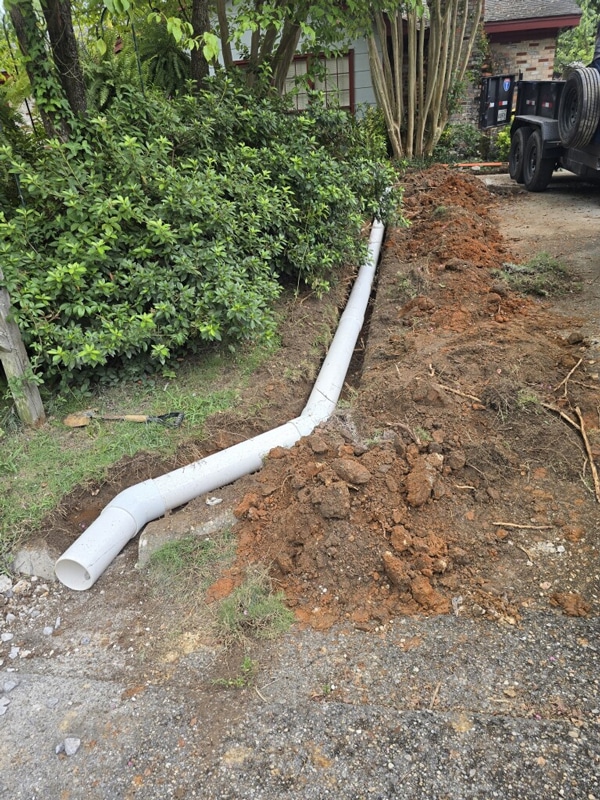
French Drain Systems Designed for Alabama Homes
Water doesn’t always show up as puddles on the surface. In many Alabama yards, it moves quietly through the soil and settles where it shouldn’t. French drains are designed to give that groundwater a clear, controlled path away from the home before it causes soggy areas or moisture problems.
BDry Alabama installs French drains to help manage saturated soil and reduce lingering water around foundations and landscapes. We are locally owned, backed by a brand with 65+ years of experience, and we help 500+ homeowners every year. With a 4.8-star Google rating, financing available, and strong warranties, you will get straightforward guidance and a drainage solution that fits how your property actually handles water.
When a French Drain Is the Right Tool for the Job
Some water problems are easy to spot, like puddles that sit on the surface. Others stay hidden, moving through the soil and keeping certain areas damp long after the rain has passed. When the issue is groundwater or consistently saturated soil, a French drain can be the cleanest way to give that water somewhere to go.
A French drain is often a good fit in situations like:
The first step is figuring out whether you are dealing with surface runoff, groundwater, or a mix of both. Once that is clear, a French drain can be designed to move water away quietly and reliably, so the same wet areas do not keep coming back.
French Drain FAQs for Alabama Homeowners
Some drainage problems are easy to see, and others stay hidden in the soil long after the rain is gone. These FAQs cover the questions Alabama homeowners ask most about French drains, including when they are the right fit, what they do, and what to expect when you schedule an inspection and talk through next steps.
Surface runoff problems are usually easier to spot. Water shows up quickly during or right after rain and follows visible paths across the yard, often pooling in low areas or flowing toward the home. These issues are closely tied to slope, grading, and how hard surfaces shed water.
Groundwater issues are quieter and tend to linger. The yard may stay soggy long after the rain has stopped, or moisture may appear near the foundation without obvious surface flow. When water is moving through the soil below the surface, a French drain is often the better solution.
A properly designed French drain is built to work quietly with minimal upkeep. Keeping it clear and allowing water to flow freely helps the system perform as intended.
- Make sure outlets remain clear and unobstructed
- Keep surface debris from covering drainage areas
- Avoid heavy compaction over the drain line
- Watch for changes in drainage patterns after major landscaping
- Address new runoff issues that could overwhelm the system
When a French drain has a clear path and is not disturbed, it can continue managing water effectively for many years.
French drains are usually installed in areas where water collects below the surface and needs a controlled path away from the home. The placement depends on how water moves through the soil and where moisture tends to linger.
Common locations include along foundations, near slopes, at the base of hills, or in sections of the yard that stay wet long after rain. The goal is to intercept groundwater and redirect it before it causes ongoing saturation or moisture problems.
A French drain inspection focuses on understanding how water moves through your yard, both on the surface and below ground. The goal is to determine whether a French drain is the right fit for the problem you are seeing.
- Review areas that stay wet or soggy
- Look at slope, soil conditions, and runoff paths
- Identify potential drain placement and outlet options
- Discuss how a French drain would work on your property
- Walk through the recommended next steps and planning
After the inspection, you will have a clearer idea of whether a French drain makes sense and how it fits into an overall drainage plan.
Yes. French drains are designed to manage water that moves through the soil, which is often the cause of yards that stay soggy long after rain. By giving that groundwater a clear route away, the soil can dry out more evenly.
While French drains may not address every surface water issue, they are very effective when saturation comes from below. In many cases, they are paired with other drainage solutions to fully resolve standing water problems.
Some water problems are obvious, and others stay hidden in the soil until the yard stays soggy or moisture shows up where it should not. French drains give that groundwater a clear path away from the home and help reduce saturated areas over time. You will get clear guidance, simple next steps, and help from a locally owned team Alabama homeowners trust.