
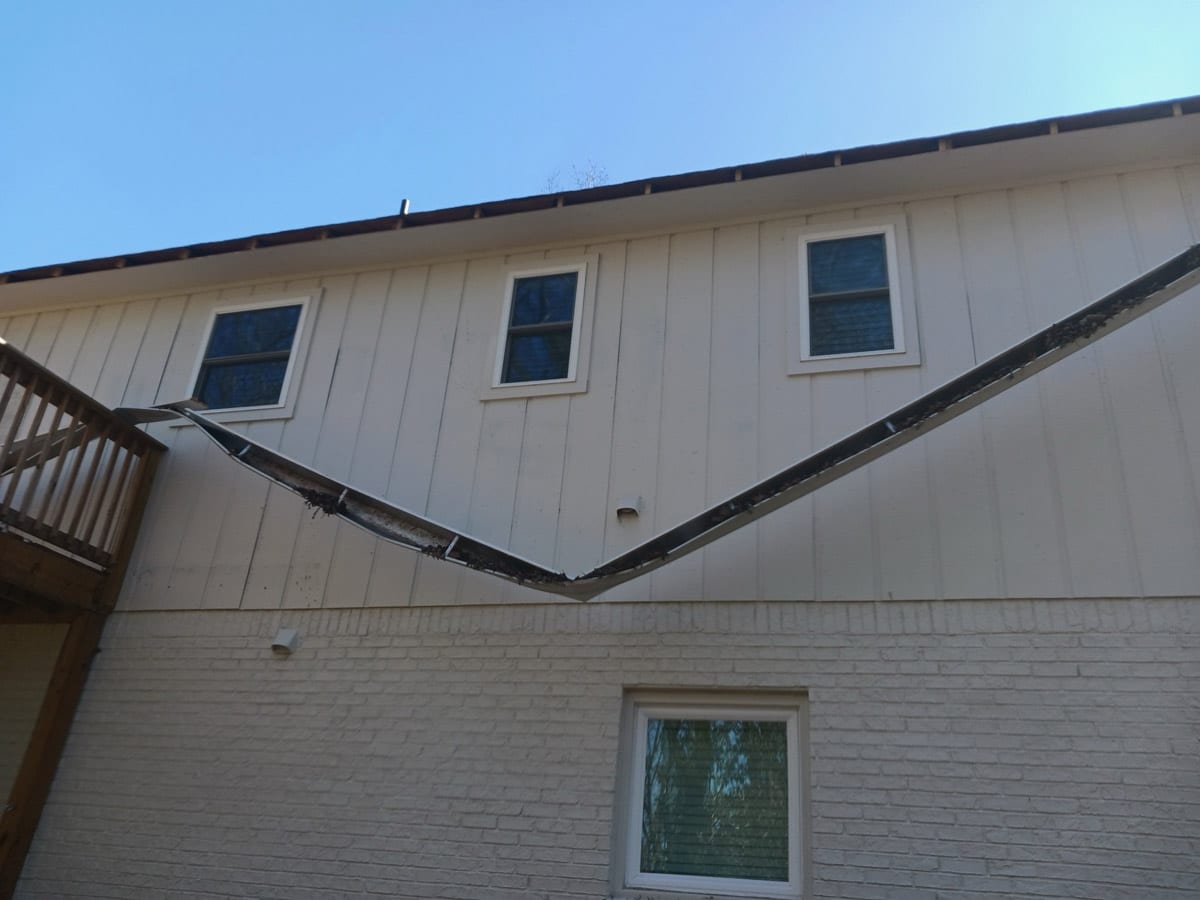
Gutter Installation That Shields Alabama Foundations
Rainwater coming off the roof has to go somewhere, and without good gutters, it usually lands in the worst possible place. Gutter installation and gutter guards help capture roof runoff, keep it moving, and send it away from the home instead of letting it overflow along the foundation and landscaping.
BDry Alabama installs gutter systems and guards that support a cleaner water path around your property. We are locally owned, backed by 65+ years of experience, and we help 500+ homeowners every year. With a 4.8-star Google rating, financing available, and strong warranties, you will get straightforward recommendations and a solution that fits your home.
Where Runoff Goes Wrong
Roof runoff usually follows the same paths every time it rains. When gutters are missing, clogged, or not set up correctly, water pours off the roof and lands right next to the home instead of being carried away. Once that pattern starts, it repeats with every storm.
Roof runoff most often causes problems in places like:
The key is controlling where the roof water goes from the start. When gutters and downspouts are doing their job, water is carried away from the home instead of being allowed to soak into the ground around the foundation.
Gutter Installation FAQs for Alabama Homeowners
Roof runoff problems usually have more than one cause, and they tend to repeat until water has a clear route away from the home. These FAQs cover the questions Alabama homeowners ask most about gutter installation and gutter guards, including what causes overflow, how solutions work, and what to expect when you schedule an inspection.
Gutter guards are covers or screens designed to keep leaves and debris from building up inside your gutters. When gutters stay clearer, water is more likely to flow the way it should instead of backing up and spilling over the edge.
They can absolutely help, especially in areas with heavy leaf drop or pine needles. Gutter guards don’t mean you can “set it and forget it” forever, but they can reduce clogs, improve flow, and cut down on the overflow that sends roof water right back toward the home.
Gutters are designed to control roof runoff so it doesn’t dump directly at the foundation. When water is collected and carried away properly, it can prevent a long list of repeat issues.
- Overflow that soaks the ground around the foundation
- Puddling and soggy spots near the home
- Washouts and erosion in landscaping beds
- Water splashing back onto exterior walls
- Moisture buildup that can contribute to basement or crawl space dampness
The key is giving roof water a clear route away from the home. When gutters and downspouts do their job, many water problems never get started.
Downspouts should discharge water far enough away from the home that it does not cycle back toward the foundation. If water is released too close, it can quickly saturate the soil and create the same soggy spots and moisture buildup after every storm.
The best setup depends on your property layout and how water naturally flows across the yard. The goal is always the same: send water away from the home and toward an area where it can drain safely without creating new pooling or erosion issues.
Gutters usually give clear clues when they aren’t catching and carrying water the way they should:
- Water spilling over the gutter edge during rain
- Drips or waterfalls at corners and seams
- Staining or streaks on siding near the roofline
- Puddles or soggy soil near the foundation
- Washed-out mulch or erosion below roof edges
If you’re seeing these signs, it usually means water isn’t being directed away from the home consistently. Fixing the flow early helps prevent bigger problems later.
Overflow often happens because water can’t move through the gutter system fast enough. Clogs from leaves and debris are a common reason, but gutters can also overflow when they’re pitched incorrectly, pulling water toward the wrong area instead of toward the downspout.
Overflow can also happen when gutters are undersized, seams are failing, or downspouts are restricted. Even moderate rain can cause problems if the system isn’t flowing smoothly, which is why identifying the cause matters more than blaming the weather.
When gutters aren’t catching and carrying water as they should, runoff ends up right where you don’t want it, along the foundation and landscaping. Gutter installation and gutter guards keep roof water moving and reduce overflow that leads to soggy spots and moisture problems around the home. Contact BDry for clear guidance, simple next steps, and support from a locally owned team Alabama homeowners trust.