
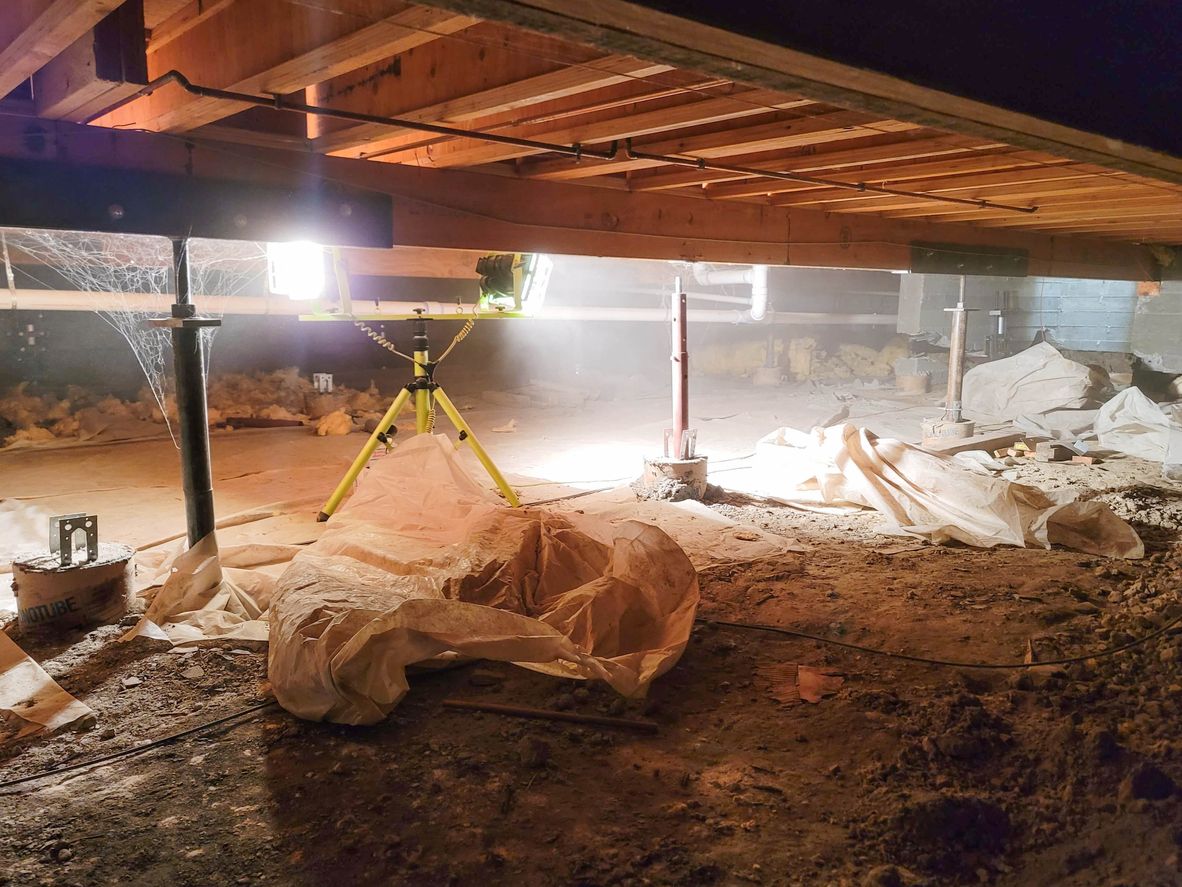
If your house smells musty even after a deep clean, the source is probably under your feet. In Alabama homes with a crawl space, that damp, earthy smell usually points to moisture and mold-friendly conditions beneath the floor, and cool fall weather makes it worse.
Crawl space moisture not only stinks up the hallway; it also feeds mold, rots wood, invites pests, and sends damp air into the rooms you live in. Here’s how to spot it, what it’s doing, and why crawl space encapsulation before winter is the smart move.
The Crawl Space Encapsulation Cheat Sheet
- A musty smell is the first and most common sign of crawl space moisture.
- Cool, damp fall weather keeps ground moisture from drying out, so problems linger into winter.
- Moisture feeds mold, wood rot, and pests, and damp air from below can reach the rooms above.
- Encapsulation seals out ground moisture and humid air with a vapor barrier, sealed vents, and optional dehumidification.
- Standing water and rot get fixed first, so an inspection comes before any sealing.
Why a Damp Crawl Space Gets Worse in Fall and Winter
Fall rain soaks the ground, and cooler air slows the drying. Instead of evaporating, moisture hangs around under your home. Add a few muggy days, and warm, humid air meets cool surfaces like ducts, pipes, and joists. That’s condensation, the same thing that makes a glass of sweet tea sweat on the porch.
Open vents make it worse by letting that damp air stroll right in. Alabama winters are mild and wet, so there’s no hard freeze to reset the space. Dampness that settles in now can stay through March, feeding everything that likes it. A professionally managed crawl space waterproofing plan starts by figuring out where that moisture is coming from.
Signs of Crawl Space Moisture Alabama Homeowners Shouldn’t Ignore
Your house usually tells you something is wrong long before you ever open the access door. Here’s what to look for.
Inside the Home
- A musty, earthy smell that cleaning never fixes
- Odor that gets stronger on cool, damp days
- Cupped, soft, or bouncy floors
- Indoor humidity that stays high
- Allergy-type symptoms that seem worse at home
In the Crawl Space
- Wet or muddy soil, or standing water after rain
- Dark staining or white, fuzzy growth on wood
- Sagging or damp insulation
- Condensation on ducts and pipes
An inexpensive humidity meter helps too. The EPA recommends keeping indoor humidity below 60 percent, ideally between 30 and 50 percent, in its guide to mold, moisture, and your home.
Pro Tip: Open the access door on a damp day. If cool, clammy, earthy air rushes out at you, moisture is hanging around down there. If you go in, wear gloves and a mask, and never step into standing water.
Mold, Wood Rot, Pests, and Air Quality: What Moisture Costs You
A damp crawl space isn’t a cosmetic problem. It works on your home in four ways at once.
Mold and Indoor Air Quality
Mold needs moisture, and a damp crawl space supplies plenty. The EPA’s position is blunt: the key to mold control is moisture control. The CDC notes that exposure to damp and moldy environments may cause a variety of health effects, or none at all, but some people get a stuffy nose, wheezing, or itchy eyes, and people with asthma or mold allergies can react more strongly. Details are on the CDC’s mold page. Since air from below drifts upward, a damp crawl space can affect the air you breathe upstairs.
Wood Rot and Soft Floors
Constant moisture weakens joists and subfloors over time. By the time floors feel soft or bouncy, the damage has usually been building for a while. Wood rot repair restores moisture-damaged wood, and floor supports shore up weak areas. If you suspect structural trouble, crawl space repair is the place to start.
Pests
Damp, dark spaces attract insects and rodents. To be clear, encapsulation is not pest control. But removing the moisture, covering bare soil, and sealing gaps makes the space far less inviting, and a cleaner crawl space makes activity easier to spot.
What Crawl Space Encapsulation Includes
Crawl space encapsulation seals your crawl space off from ground moisture and humid air, so dampness has a much harder time settling in. A typical project includes:
- A durable vapor barrier over the ground and up the crawl space walls
- Sealing of vents and gaps that let humid air move in and out
- Moisture control support to keep the space drier over time
- Attention to problem areas where water or dampness builds up
- Optional dehumidification when conditions call for it
Here’s the honest part. If water is standing in your crawl space, that gets handled first, usually with exterior drainage work or a sump pump. Rotted wood gets repaired before anything is sealed over it. Encapsulation works best on a space where water is already under control.
Many homeowners notice the home feels fresher afterward, and encapsulation often helps reduce the musty odors that drift up from below.
Pro Tip: A loose sheet of plastic from the hardware store is not encapsulation. Seams, wall coverage, and prep work decide whether a vapor barrier actually performs.
Why Fall Is the Time to Encapsulate
Moisture that sits through a cool, wet winter keeps feeding mold and rot for months. Fix it now, and you stop that clock before it runs. You also get the work done before holiday guests show up wondering what that smell is.
Some steps are fair game for DIY:
- Clear leaves and debris around vents and the foundation
- Extend downspouts away from the house
- Check for plumbing leaks
- Run a dehumidifier in the living space if humidity runs high
Call a professional if you see standing water, visible mold, soft floors, or suspected rot. Financing options are available, and if you’re in the Birmingham area, our local team is ready to help throughout the Birmingham service area.
A Musty Smell Is Your Crawl Space Asking for Help
That smell has a source, and it’s rarely your living room. Moisture under the home feeds mold, rot, and pests, and the sealed, managed crawl space that stops it is far easier to build before winter than after. BDry Alabama has helped homeowners across Central and North Alabama for over 65 years, and the BDry Elite plan keeps your home protected year-round.
Schedule Your Crawl Space Encapsulation Inspection Before Winter
Musty smells, damp air, and soft floors don’t fix themselves. BDry Alabama’s inspection gives you plain-language answers and a plan built around what your crawl space actually needs.
Call (205) 942-1976 or contact us online to schedule yours today.