
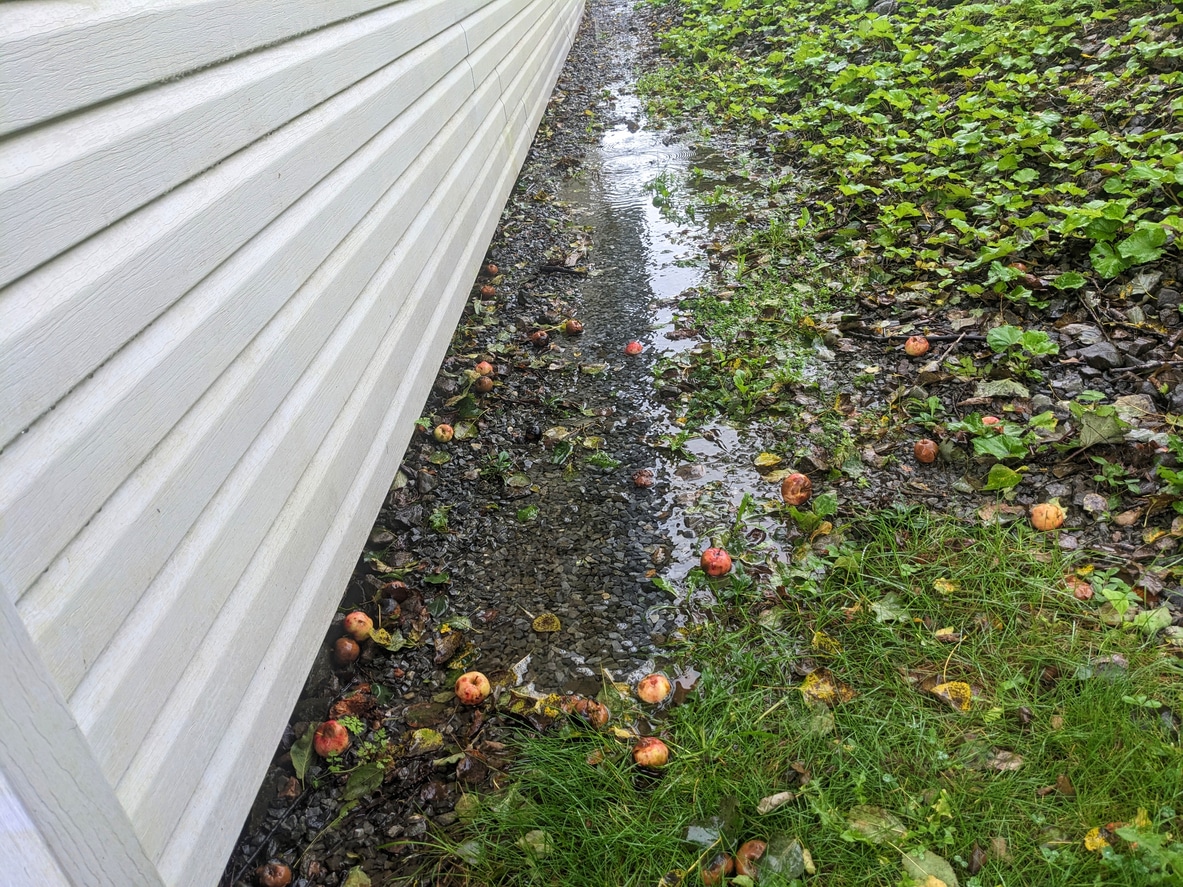
If water pools around your foundation every time it rains in Alabama, well, that’s not just bad luck on your part. In fact, it’s a drainage problem that’s trying to get your attention. That puddle that shows up in the same spot after every storm isn’t random. It’s following a path your yard has quietly built for it, and that path leads straight to your foundation.
Alabama averages over 56 inches of rain per year, well above the national average. All that water has to go somewhere. When your yard can’t move it fast enough, it stacks up against the one thing you really don’t want it near: the concrete and masonry holding your home up. Here’s what’s causing it, what it’s doing to your foundation, and, more importantly, how to fix it.
The Water Report: What You Need to Know First
- Water pooling around your foundation isn’t a yard problem; it’s a structural risk.
- Alabama’s red clay soil sheds water rather than absorbing it, making drainage problems more common and severe here than in most states.
- Water sitting against a foundation wall builds pressure, causing cracks, bowing, and moisture intrusion over time.
- Most drainage problems have a fixable cause: grading, soil, gutters, or a combination of all three.
- If water hasn’t drained from your yard within 24 hours of rain stopping, something is working against you.
Why Alabama Yards Are Fighting a Losing Battle With Water
You’re not imagining it: drainage is genuinely harder in Alabama than in many other places. The culprit is the red clay soil that covers most of Central and North Alabama. Clay doesn’t drain. It compacts, it sheds water, and when it gets saturated, it holds that moisture like a sponge that’s already full. The result is a yard that can’t absorb rain fast enough, so the water goes sideways, and downhill, straight toward your home.
But clay isn’t the only problem. A few other common contributors:
- Negative grading — when the yard slopes toward the house instead of away, gravity does the rest
- Compacted soil — high-traffic areas absorb almost nothing; water sheets right off
- Misdirected downspouts — a single downspout can dump 300+ gallons against your foundation during a moderate storm
- Hard surfaces — driveways, patios, and sidewalks redirect sheet flow toward the home instead of away
- Low spots — dips and depressions in the yard become collection points every single rain
The USDA Natural Resources Conservation Service Web Soil Survey maps shrink-swell clay distribution across Alabama counties: if you’re in a high-clay area, your drainage challenges are baked into your zip code.
What Standing Water Is Actually Doing to Your Foundation
Here’s where a nuisance becomes a real problem. Water sitting against your foundation wall isn’t just sitting there minding its own business; it’s working.
Hydrostatic pressure is the force that saturated soil exerts against a foundation wall. The longer water pools and the deeper it saturates, the more pressure builds. Over time, it bows walls inward, opens cracks, and pushes moisture through porous concrete into your basement or crawl space. It doesn’t happen overnight — but it doesn’t stop, either.
The damage chain typically looks like this:
- Water pools against the foundation
- Soil stays saturated, building lateral pressure on walls
- Cracks form, or existing ones widen
- Moisture seeps in, bringing humidity, mold risk, and wood rot with it
- The foundation begins to shift or settle unevenly
Standing water is also one of the leading causes of the kind of foundation cracks that require serious structural repair. The drainage problem you ignore today has a way of becoming the foundation repair bill you didn’t budget for next year.
Pro Tip: Check your basement or crawl space walls for white chalky residue after heavy rain. That’s efflorescence, mineral deposits left behind by water moving through concrete, and it’s a reliable sign that water pressure is working against your foundation.
How to Tell When Your Drainage Problem Is Serious
Not every puddle is an emergency. But some patterns are worth acting on quickly.
The 24-hour rule: In a healthy yard, water should drain completely within 24 hours of rain stopping. Anything longer means your soil, grading, or drainage system isn’t keeping up.
Watch for these warning signs:
- Puddles or soggy areas that persist more than a day after rain
- Water visibly flowing toward the house during or after a storm
- Mud or saturated soil that never fully dries between storms
- Soil eroding or pulling away from the foundation
- Gutters overflowing or downspouts emptying directly against the home
- Moisture stains, musty smell, or efflorescence inside the basement or crawl space
If you’re checking two or more of those boxes, your yard is telling you something worth listening to.
Drainage Solutions That Actually Work in Alabama Clay
The right fix depends on the cause, and there’s no one-size-fits-all answer. Here’s how the main solutions stack up:
Regrading
If your yard slopes toward the house, correcting the grade is often the first and most effective step. The ground should slope away from the foundation at least six inches over the first ten feet. It’s unglamorous work, but it addresses the root cause directly.
French Drains
A French drain is a perforated pipe buried in a gravel trench that intercepts groundwater and redirects it away from the home. It’s the workhorse solution for Alabama clay soil — particularly effective when water is entering from an uphill direction or saturating the soil along a foundation wall. A French drain needs to be sloped correctly to function; a flat or reverse-sloped one just relocates the problem.
Dry Creek Beds
A dry creek bed channels surface runoff through a gravel-lined path that doubles as a landscaping feature. It’s a functional and visually appealing option for yards with natural runoff channels or defined low spots. When built correctly, it moves a significant volume of water without disrupting the rest of the yard.
Erosion Control
For sloped properties that lose soil during heavy rain, erosion control measures, retaining structures, ground cover, or engineered slope stabilization prevent the ground from washing away and keep the foundation’s supporting soil in place.
Don’t Overlook the Gutters
Before anything else, make sure downspouts extend at least 6 feet from the foundation and drain freely. The International Association of Certified Home Inspectors consistently lists improper gutter discharge as one of the most common contributors to foundation water damage in residential properties, and it’s the most affordable fix on this list.
DIY or Call a Pro? Here’s the Honest Answer
Extending a downspout, clearing gutters, or adding mulch to a low spot are reasonable weekend projects that can make a real difference for minor issues.
Regrading, French drain installation, and erosion control are in a different category. These require proper slope calculations, material selection, and outlet planning. A French drain installed at the wrong slope just costs you money as it moves your puddle to a new location. Done incorrectly, drainage work can make water problems worse, not better.
A professional drainage assessment starts with understanding the full picture: where water enters the property, where it wants to go, and what’s standing in the way. That context is what separates a solution that works from one that looks like it should.
Water Always Wins, Unless You Give It Somewhere Better to Go
Water pooling around an Alabama home isn’t random, and it doesn’t fix itself. The cause is almost always identifiable: clay soil, poor grading, misdirected gutters, or a combination, and the fix is almost always achievable. What matters is acting before the drainage problem becomes a foundation problem, because by then the cost and complexity will have gone up significantly.
The right exterior drainage solution doesn’t just clear your yard faster after a storm. It protects the structure beneath your home from the kind of slow, sustained damage that water does best.
Stop the Puddle Before It Becomes a Problem: Schedule a Drainage Inspection in Alabama
That same low spot filling up after every rain isn’t going to drain itself. BDry Alabama’s team has been solving exterior drainage and foundation protection problems across Central and North Alabama for over 65 years, and we’ll tell you straight what’s causing it and what will actually fix it.
Call (205) 942-1976 or contact us online to schedule your drainage inspection today.