
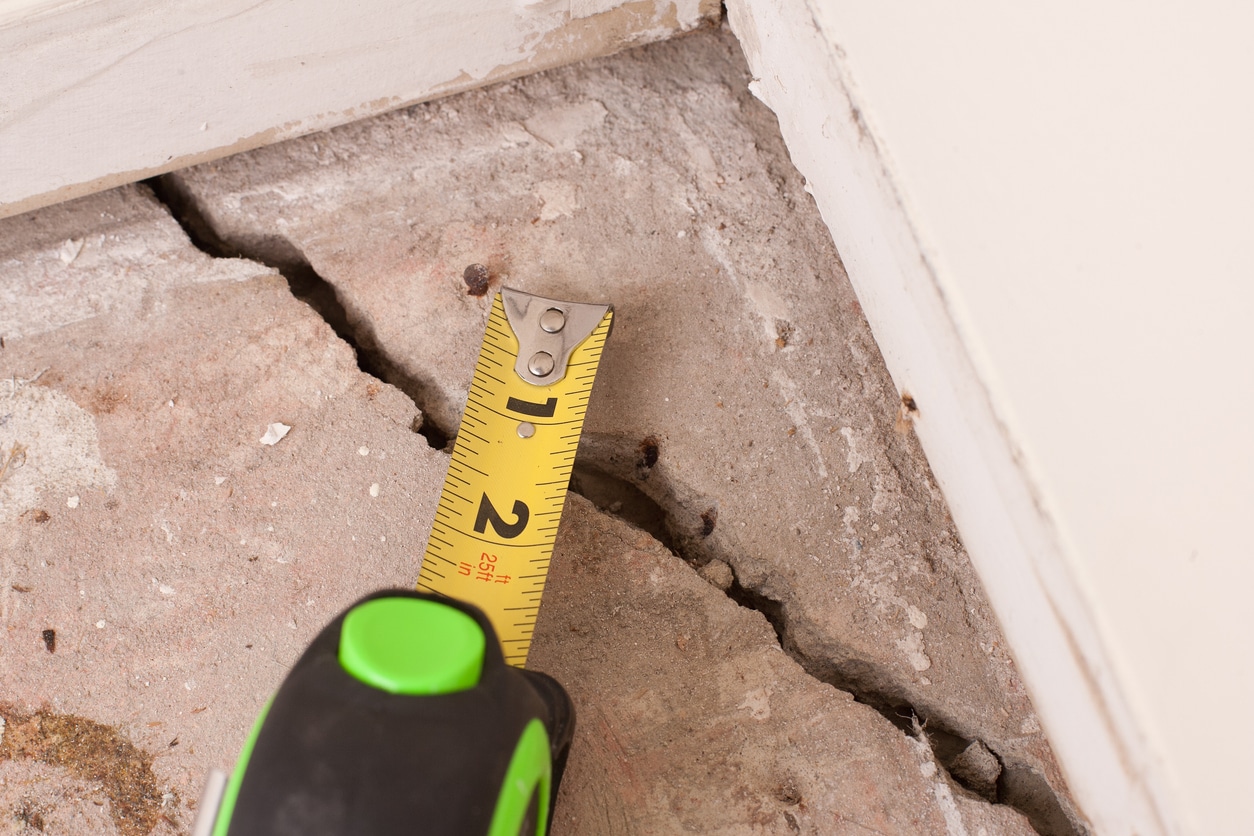
That crack in your foundation wall? It might be nothing. Or it might be your house trying to tell you something important. Either way, standing there squinting at it and hoping for the best isn’t a strategy.
Foundation cracks are among the most common and misunderstood issues Alabama homeowners face. The good news: most cracks aren’t emergencies. The bad news: some absolutely are, and telling the difference matters. Here’s how to read what your foundation is actually telling you.
The Crack Cheat Sheet
- Not all foundation cracks are dangerous — type, direction, and width are what matter.
- Horizontal cracks are the most serious; hairline vertical cracks are usually of low concern.
- A crack that’s growing, leaking, or shifting sides is a red flag that needs professional eyes.
- DIY patching hides a crack, but it doesn’t fix what caused it.
- When in doubt, an inspection beats a guess every single time.
Why Your Foundation Cracked in the First Place
Concrete cracks. That’s not a flaw, that’s just physics. As a home settles over time, minor cracking is completely normal. The problem starts when the ground underneath does something unexpected.
In Alabama, that “something unexpected” happens constantly. The red clay soil that covers most of Central and North Alabama swells when it’s wet and shrinks when it dries out, and it does both aggressively. That constant push-and-pull puts real stress on your foundation walls. Add in poor drainage, heavy rain, drought cycles, or a tree root that’s decided your footer looks like a great snack, and you’ve got a recipe for cracking.
The question isn’t why it cracked, it’s what kind of crack you’re dealing with.
Reading the Crack: What Each Type Is Telling You
A crack in your foundation isn’t a diagnosis on its own; it’s a clue. The shape, direction, width, and location of each point to something specific. Here’s what the most common types indicate.
Hairline and Vertical Cracks
These are the most common and usually the least concerning. Thin vertical cracks, especially in poured concrete, often show up as concrete cures and dries. If a vertical crack is less than 1/16 of an inch wide, not leaking, and hasn’t changed in months, it’s likely cosmetic.
Monitor it. Mark both ends with a pencil and the date. Check back in 60–90 days. If it hasn’t moved, you’re probably fine.
Diagonal and Stair-Step Cracks
These run at an angle, or in a stair-step pattern, across a block or brick foundation. They typically signal differential settling, meaning one part of your foundation is moving more than another. Mild diagonal cracking can be normal. A diagonal crack that’s wider at one end, actively growing, or paired with a door that won’t close properly, is worth a professional look.
Stair-step cracks in brick or block walls are especially worth watching. The American Society of Civil Engineers considers differential foundation movement one of the leading causes of structural damage in residential homes.
Horizontal Cracks
Stop here. A horizontal crack in a basement or foundation wall is the most serious type, full stop. It means the soil outside is pushing inward, and that wall may be starting to bow. This is not a “wait and see” situation. It’s a “call someone today” situation.
If you’ve got a horizontal crack, skip the YouTube tutorials. This one needs a structural evaluation.
Cracks With Displacement or Moisture
If one side of the crack sits higher than the other, or if you’re seeing white chalky residue (called efflorescence) around it, the stakes go up. Displacement means movement is happening unevenly. Efflorescence means water is moving through the crack, and water in a foundation wall is never just a cosmetic issue.
Pro Tip: The USDA Natural Resources Conservation Service has detailed soil data for Alabama counties. If you live in an area with high-shrink-swell clay, your foundation is under more stress than average, year-round.
Warning Signs a Crack Is Getting Worse
A crack doesn’t have to be wide to be serious; it just has to be changing. Watch for these:
- The crack is visibly wider than when you first noticed it
- New cracks are showing up near windows, doors, or corners
- Doors or windows are sticking or no longer latching properly
- Floors feel uneven or have developed a noticeable slope
- Water is seeping through the crack after heavy rain
- The crack has shifted, and one side is now higher than the other
Any one of these on its own is worth a call. More than one? Don’t wait.
DIY or Call a Pro? Let’s Be Honest.
Here’s the straight answer: a tube of hydraulic cement or crack filler can seal a crack, but it cannot fix what caused it. That’s like putting a bandage over a check engine light.
For a stable, dry, hairline crack with zero change over 60–90 days, monitor it. That’s reasonable. For anything wider than ¼ inch, anything leaking, anything horizontal, or anything that’s moved, you need a professional evaluation, not a hardware store run.
A proper foundation inspection uses more than a flashlight and a hunch. At BDry Alabama, we use foundation scan technology to measure actual movement, not just what’s visible on the surface. That means a smarter diagnosis and a repair plan built around what your home actually needs, not a one-size-fits-all guess.
The Bottom Line on Foundation Cracks
Most cracks are not emergencies. But some are, and the difference lives in the details. Crack type, width, direction, moisture, and movement are what separate “keep an eye on it” from “fix this now.” The worst thing you can do is assume.
Schedule Your Free Foundation Inspection in Alabama
If you’ve got a crack you’re not sure about, the easiest thing you can do is stop guessing. BDry Alabama has been helping homeowners across Central and North Alabama get clear answers and real solutions for over 65 years. One call gets you an honest inspection, straight talk about what we find, and a plan that makes sense for your home.
Call us at (205) 942-1976 or contact us online to schedule your free inspection today.