
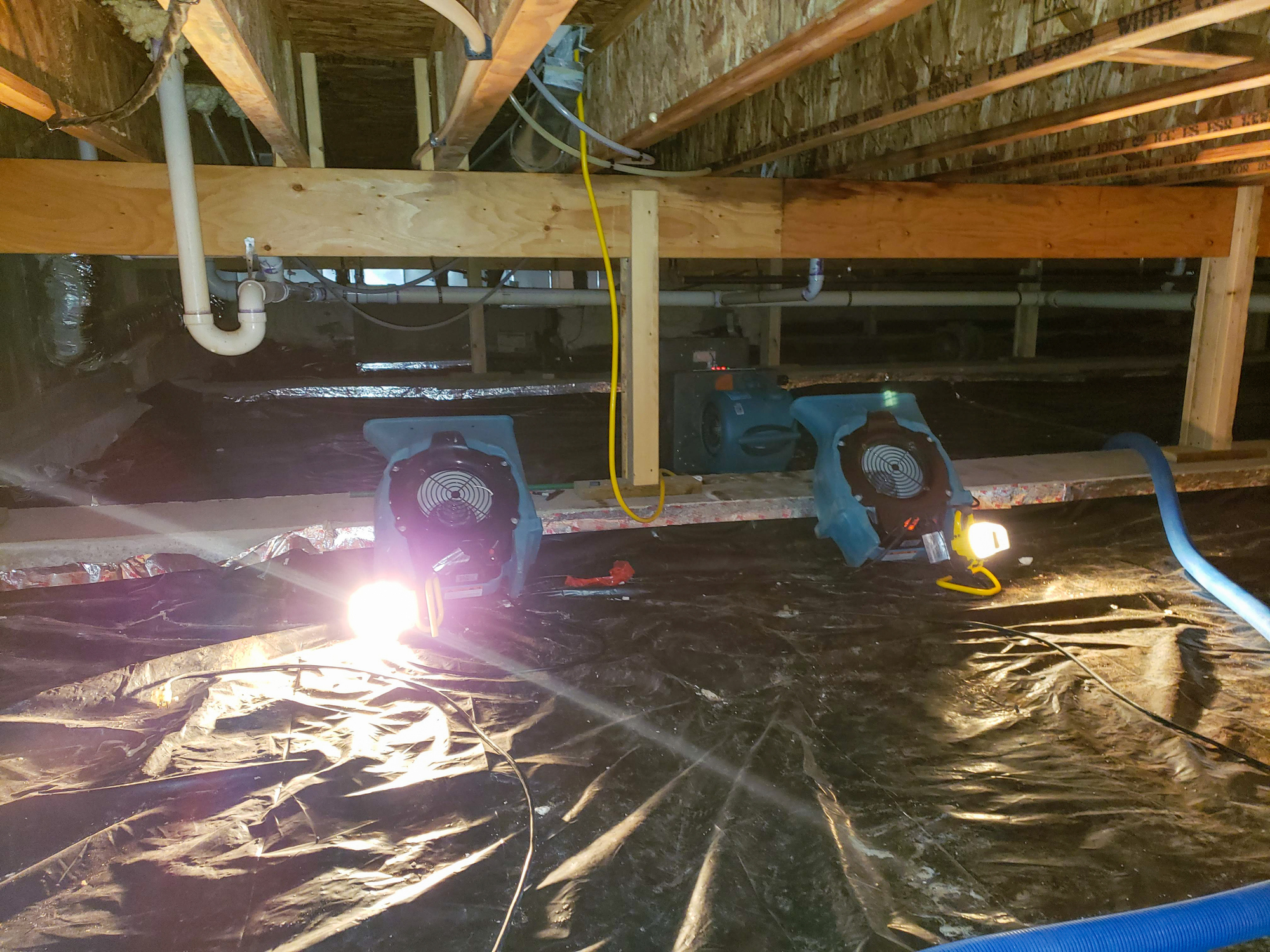
Your house is clean. The laundry is done. The trash went out on Tuesday. And yet… that smell. Musty, damp, faintly earthy, and it follows you from room to room. If you have a crawl space under your home, that smell almost certainly isn’t coming from your living area. It’s coming from below.
Crawl space moisture in Alabama homes is one of the most common (and overlooked) sources of indoor air quality problems, structural damage, and energy inefficiency. The problem starts under your floors and works its way up. Here’s exactly how it happens, what it does along the way, and what actually stops it.
What’s Under Your Floors Is Getting Into Your Air
- Up to 50% of the air on a home’s first floor comes from the crawl space, and in Alabama, that air is often loaded with moisture, mold spores, and musty odors.
- The stack effect pulls crawl space air upward into your living space every single day, whether you know it or not.
- Crawl space moisture causes mold, wood rot, sagging floors, pest infiltration, and higher energy bills, often before any visible damage appears.
- Crawl space encapsulation seals moisture at the source and breaks the cycle before it reaches your living space.
How Crawl Space Moisture Spreads Through Your Entire Home
Here’s the part most homeowners have never heard: the air in your home moves like a chimney. Warm air rises and escapes through the upper levels, creating a low-pressure zone at the bottom that pulls replacement air in from below through gaps in the floor, plumbing penetrations, HVAC connections, and any unsealed opening between the crawl space and the living area. This is called the stack effect, and it’s a very real and very physical phenomenon.
The EPA estimates that up to 50% of the air in a home’s first floor enters from below. In Alabama, where ground moisture, clay soil, and high humidity combine year-round, the air carries moisture, mold spores, and organic odors straight into the rooms where your family lives. It’s just how every home works when the crawl space isn’t properly sealed.
What Crawl Space Moisture Actually Does to Your Home
The musty smell is the first sign. It’s not the worst one.
Wood Rot and Structural Damage
Sustained moisture causes the floor joists and structural wood in the crawl space to soften and rot over months and years. By the time it’s obvious, the damage is significant. BDry Alabama’s wood rot repair service addresses moisture-damaged structural wood and reinforces affected areas, but catching it early is always cheaper than catching it late.
Sagging and Soft Floors
As joists lose integrity, the floors above them start to show it: soft spots, slight bouncing, or rooms that feel subtly unlevel. If your floors have started to feel spongy or uneven, that’s a structural signal, not a cosmetic one. Floor support services address compromised support areas before the problem moves further up the structure.
Pests, HVAC Strain, and Higher Bills
Damp crawl spaces are ideal habitats for termites, carpenter ants, and rodents, all of which cause structural damage on top of moisture damage. On top of that, HVAC systems drawing in humid crawl space air work harder to condition it, which shows up directly on your energy bill.
The HUD Healthy Homes program consistently identifies uncontrolled crawl space moisture as a leading contributor to both structural deterioration and poor indoor air quality in residential homes.
Warning Signs That Crawl Space Moisture Is Already in Your Home
You don’t need to crawl under the house to get a read on what’s happening. Watch for these:
Inside the home:
- Persistent musty smell that survives cleaning and airing out
- Floors that feel soft, springy, or slightly uneven
- Higher indoor humidity than normal, especially in summer
- Allergy or respiratory symptoms that improve when you leave the house
- Energy bills are running higher than expected
Near or at the crawl space access:
- Cool, damp air pushes outward when you open the access door
- Visible dark staining or soft spots on exposed wood
- Insulation that has dropped or is hanging from the floor above
- Any visible white or fuzzy growth on wood surfaces
Pro Tip: Hold your hand near the crawl space access door on a humid Alabama afternoon. If you feel cool, damp air pushing outward, moisture is actively migrating from below into your living space — right now, today.
How Crawl Space Encapsulation Stops Moisture From Spreading
Crawl space encapsulation seals the crawl space from the ground up, blocking moisture at its source before the stack effect can pull it upward.
BDry Alabama’s encapsulation process typically includes:
- Heavy-duty vapor barrier installed over the ground surface and up the crawl space walls
- Sealing of vents, gaps, and penetrations that allow humid outside air to enter
- Drainage management for any water that enters before it can pool
- Optional dehumidification for homes with persistent humidity challenges
- Wood rot repair and floor support reinforcement where damage has already occurred
Once the crawl space is properly sealed and managed, the stack effect loses its fuel supply. The moisture doesn’t migrate upward because it’s no longer there to migrate.
Pro Tip: A vapor barrier laid loosely on the ground is not crawl space encapsulation. It’s a starting point for a dry crawl space without active water entry. If moisture is already causing damage, the fix needs to match the scale of the problem, and that means a complete system, not a hardware store roll of plastic.
What Homeowners Can Do, and Where Professional Help Makes the Difference
For mild seasonal humidity with no signs of damage, a few DIY steps can help: extend downspouts away from the foundation, clear debris from crawl space vents, and run a standalone dehumidifier. These are reasonable starting points for low-level moisture management.
Where DIY stops working: standing water, active moisture intrusion, visible mold, soft floors, or any sign of wood rot requires professional assessment; not because the fixes are complicated, but because improperly installed vapor barriers and ignored structural damage get worse, not better.
If repair costs feel like a barrier, BDry Alabama offers flexible financing options that make it easier to move forward before the damage compounds.
Crawl Space Moisture Doesn’t Stay in the Crawl Space
The musty smell, the soft floor, the humidity that just won’t quit: they’re downstream symptoms of a problem that starts below and works its way up through your home every day. Crawl space moisture is one of the most fixable problems in Alabama homes, but only when it’s addressed at the source.
BDry Alabama has been solving crawl space moisture problems across Central and North Alabama, from Birmingham and Huntsville to Tuscaloosa, Vestavia Hills, and beyond, for over 65 years. The BDry Elite maintenance plan also keeps crawl spaces monitored between seasons, so small problems get caught before they turn structural.
Stop the Moisture Before It Reaches Your Living Room By Scheduling a Free Crawl Space Inspection
That musty smell has a source, and it’s probably not where you’ve been looking. BDry Alabama’s free crawl space inspections give you a clear picture of what’s happening under your floors. Call (205) 942-1976 or contact us online to schedule your free inspection today.